How I Cook Sous Vide
I have recently discovered sous vide cooking. For those that are not familiar with this method of cooking it is basically cooking food in a bag at a low, controlled temperature. I am fairly new to this method of cooking so I am not giving advice on food safety or anything like that.
I decided to try it, because I wanted to be able to perfectly cook a steak. I think I’ve achieved that and have also had great results with pork and chicken as well.
If you want to try it you can probably start with something you already own. When I started I used a Masterbuilt turkey fryer and a thermometer with a probe. It took some monitoring to keep the water bath at an even temperature, but I got decent results.
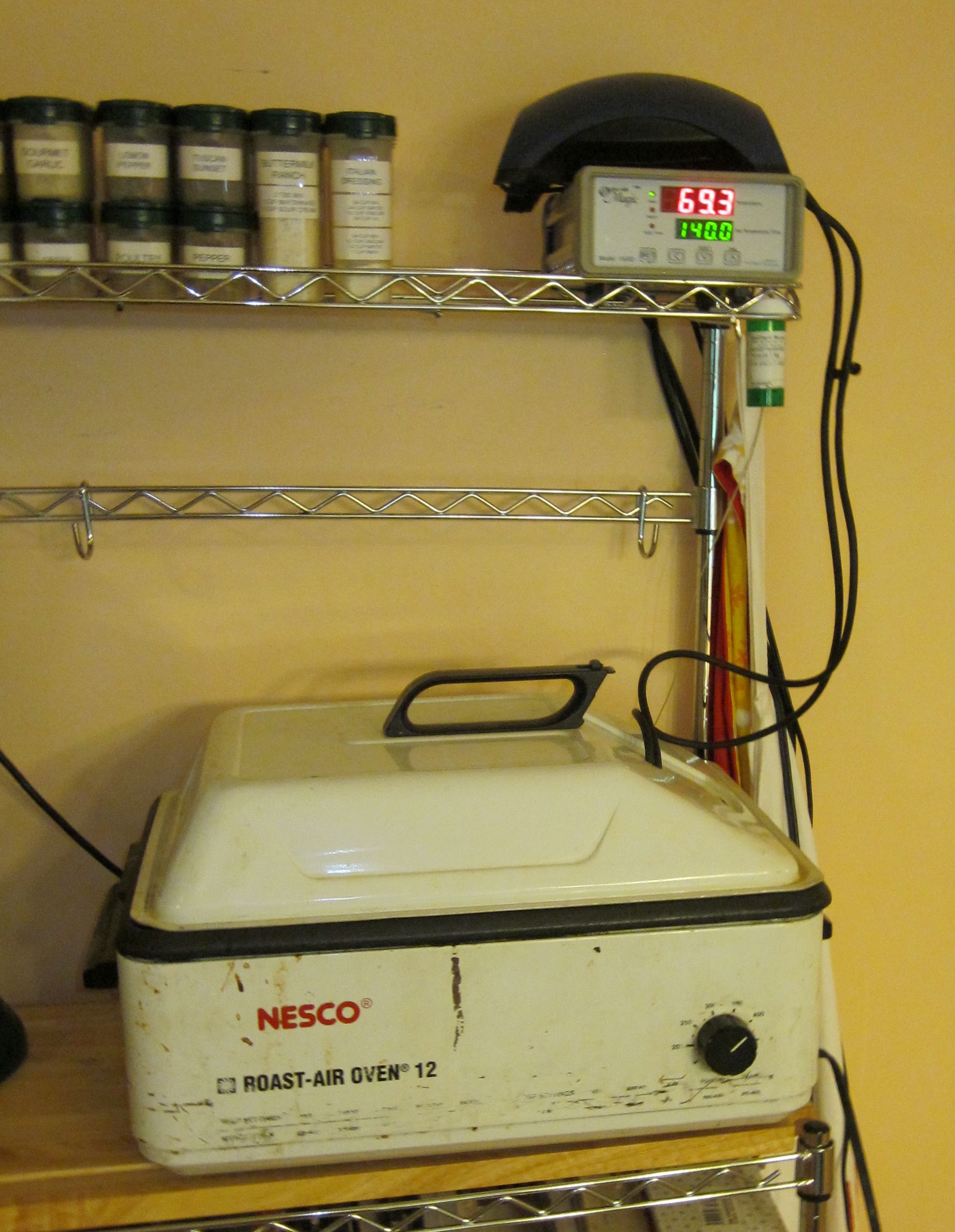
I would like to share with you my sous vide setup and how I use it. One thing I have learned is that there are many different ways you can set up a system. I already had the cooking device so my basic setup was probably about $200. Here’s what I use for the cooking:
- Sous Vide Magic (SVM) temperature controller
- Tetra aquarium pump with two air outlets
- Nesco 12 quart oven
- cooking rack
You will also need a vacuum sealer or Ziploc bags.
Here’s how I set it up:
Set the Nesco to 400° and fill about 3/4 full with water.
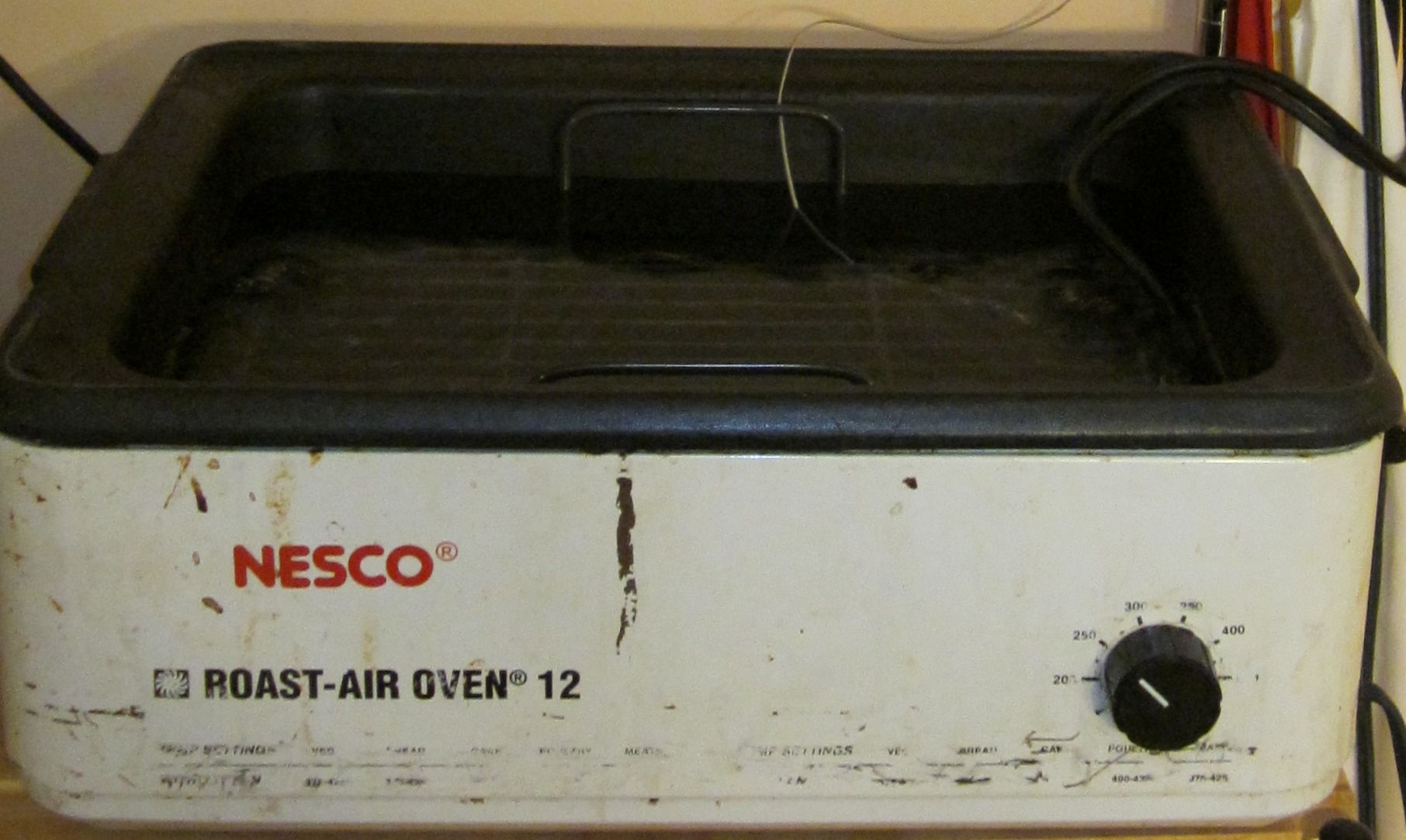
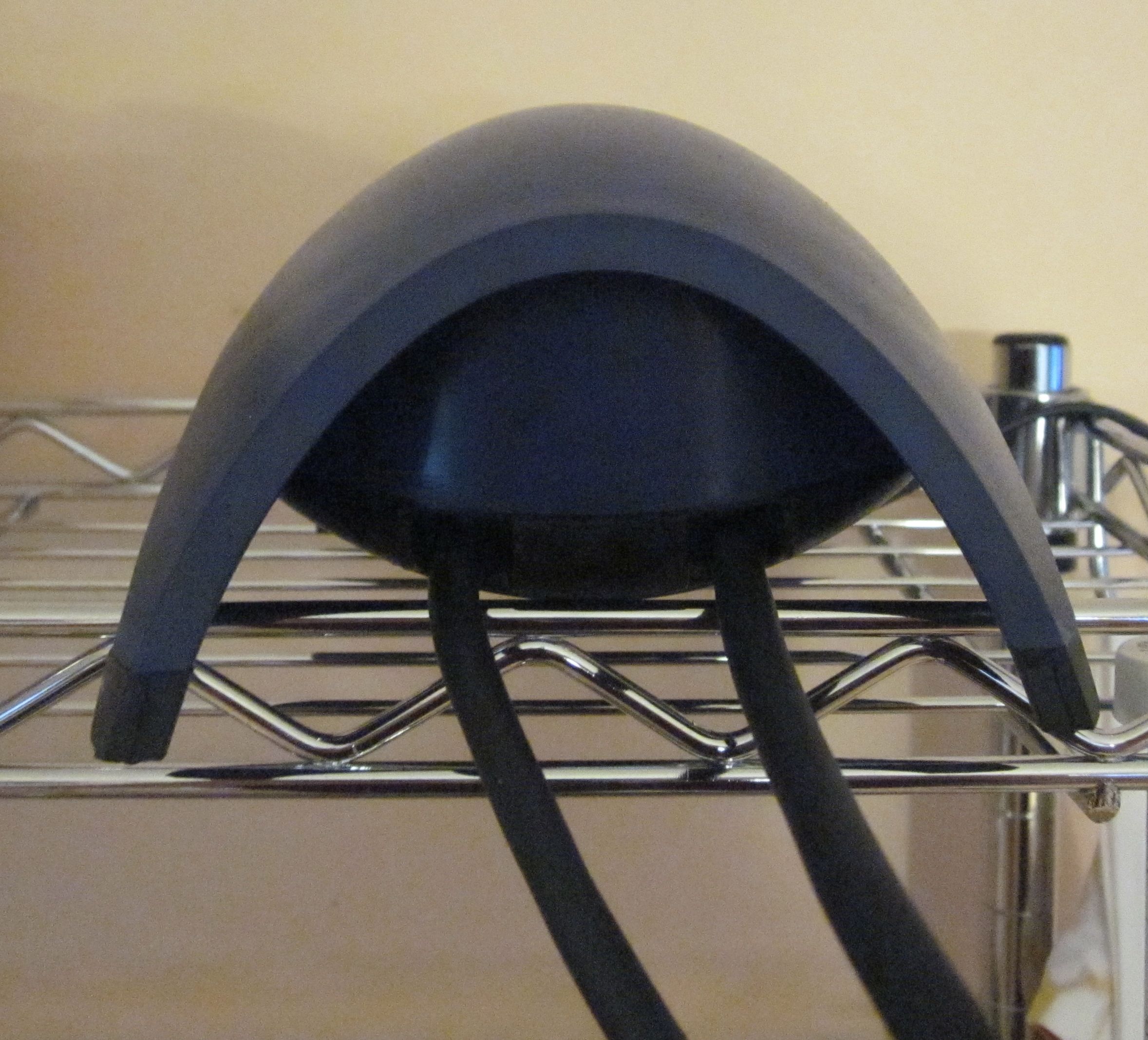
Set up the air hoses and temperature probe under a cooking rack. The air hoses are to keep the water circulating and helps to keep an even temperature. The temperature probe underneath is so it’s not touching the food.
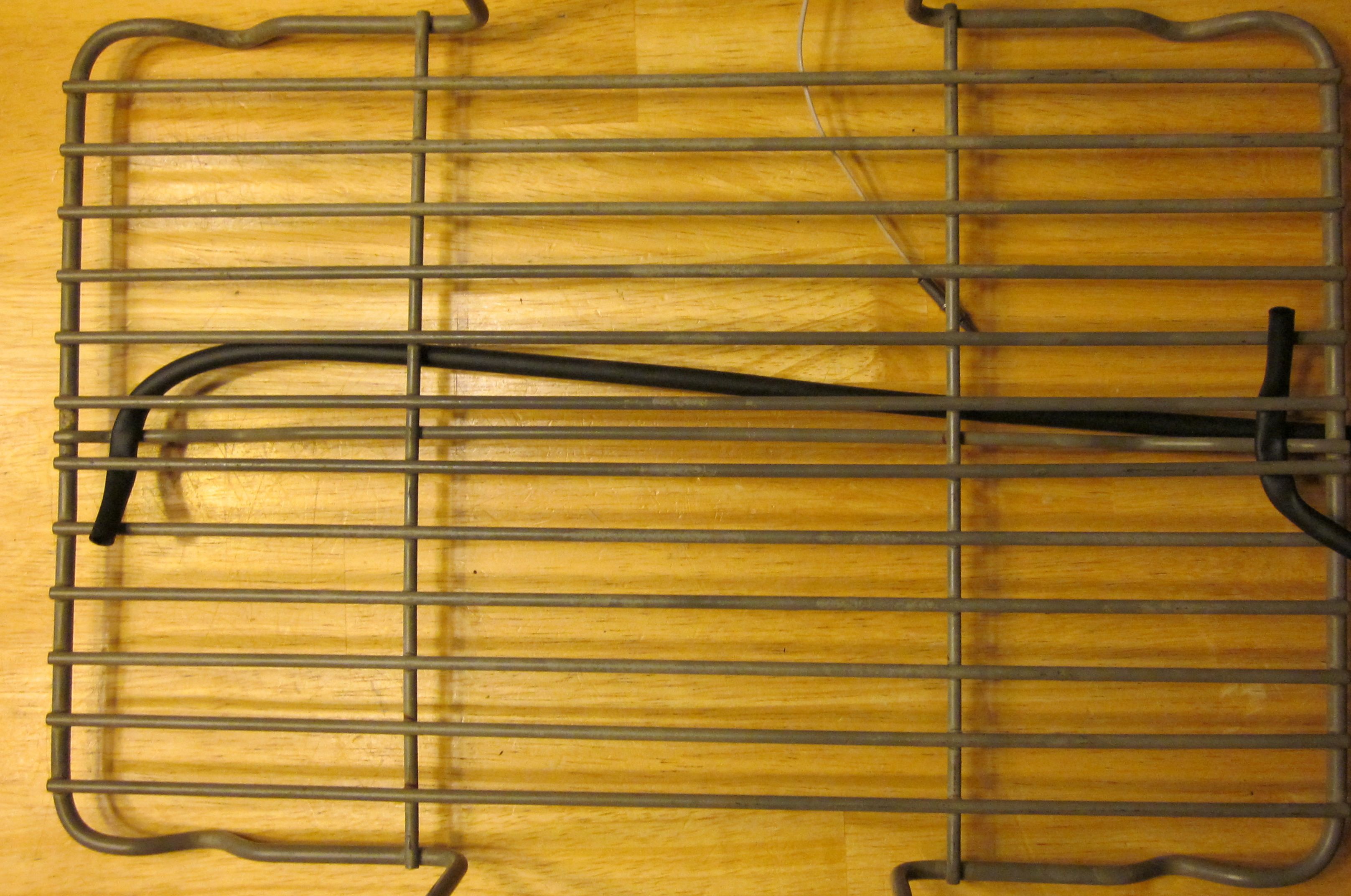
Plug the Nesco and temperature probe into the SVM. Plug in the SVM and set the temperature. The SVM monitors the temperature of the water bath and turns the Nesco on and off accordingly. When I first used it I had the temperature dial of the Nesco cranked up to 500°. The temperature fluctuations were too great. I use it at 400° now and I get pretty consistent results +-.5°.
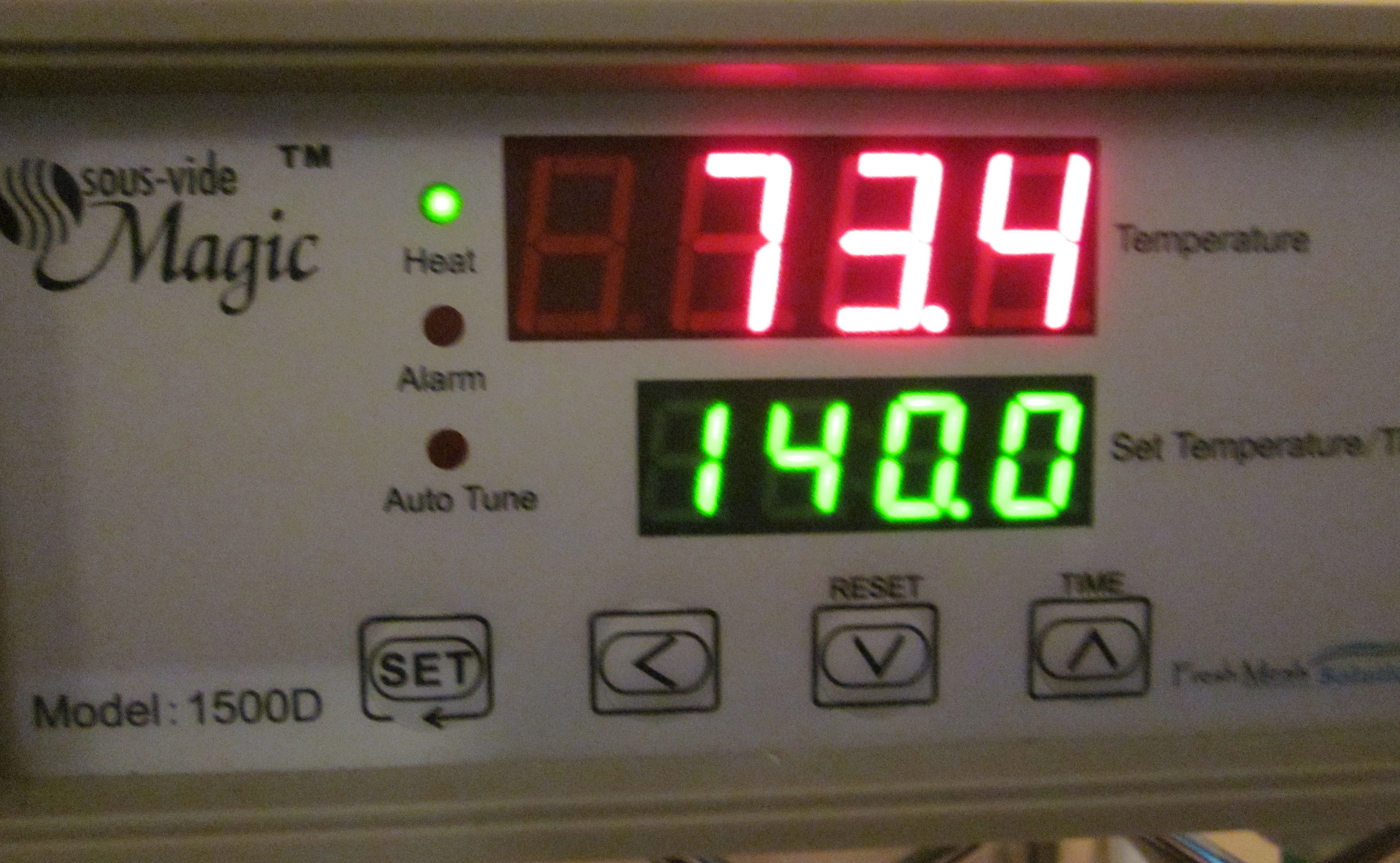
Attach the air hoses and plug in the air pump. This air pump came with airflow valves that I use to keep the bubbles to a moderate level.
Here is the finished setup.
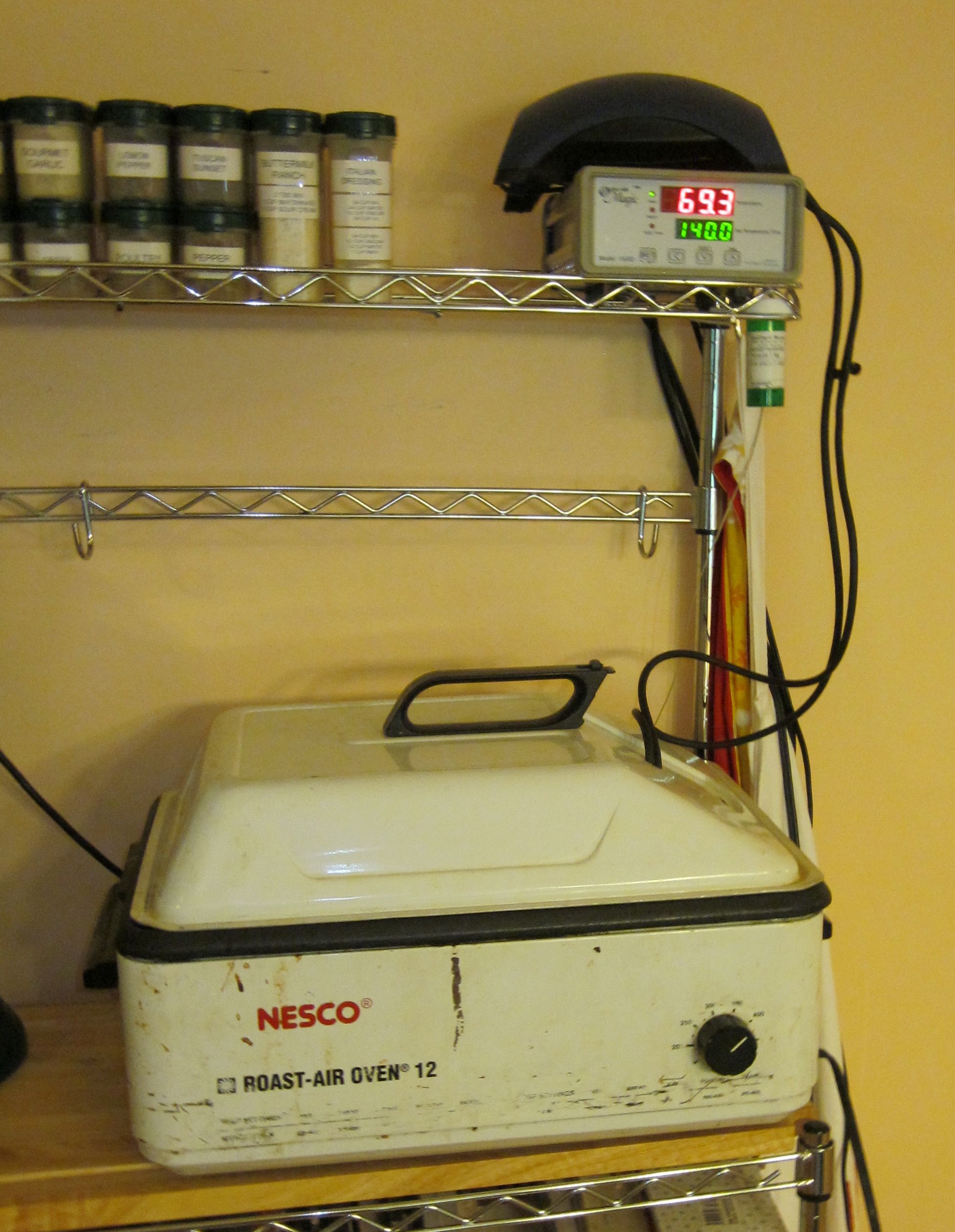
It takes maybe half an hour to set everything up. Once it’s cooking I can pretty much leave it (for a couple days if necessary). I have made mistakes here and there like forgetting to put the probe in the water and plugging the air pump into the SVM (both end up with the bags boiling). I have a permanent label on the Nesco cord and I try to keep a close eye on the probe now. One other time I let the air hoses drop down which created a siphon and a huge puddle on the floor. In spite of the learning curve (and stupid mistakes) it’s been fun to try.
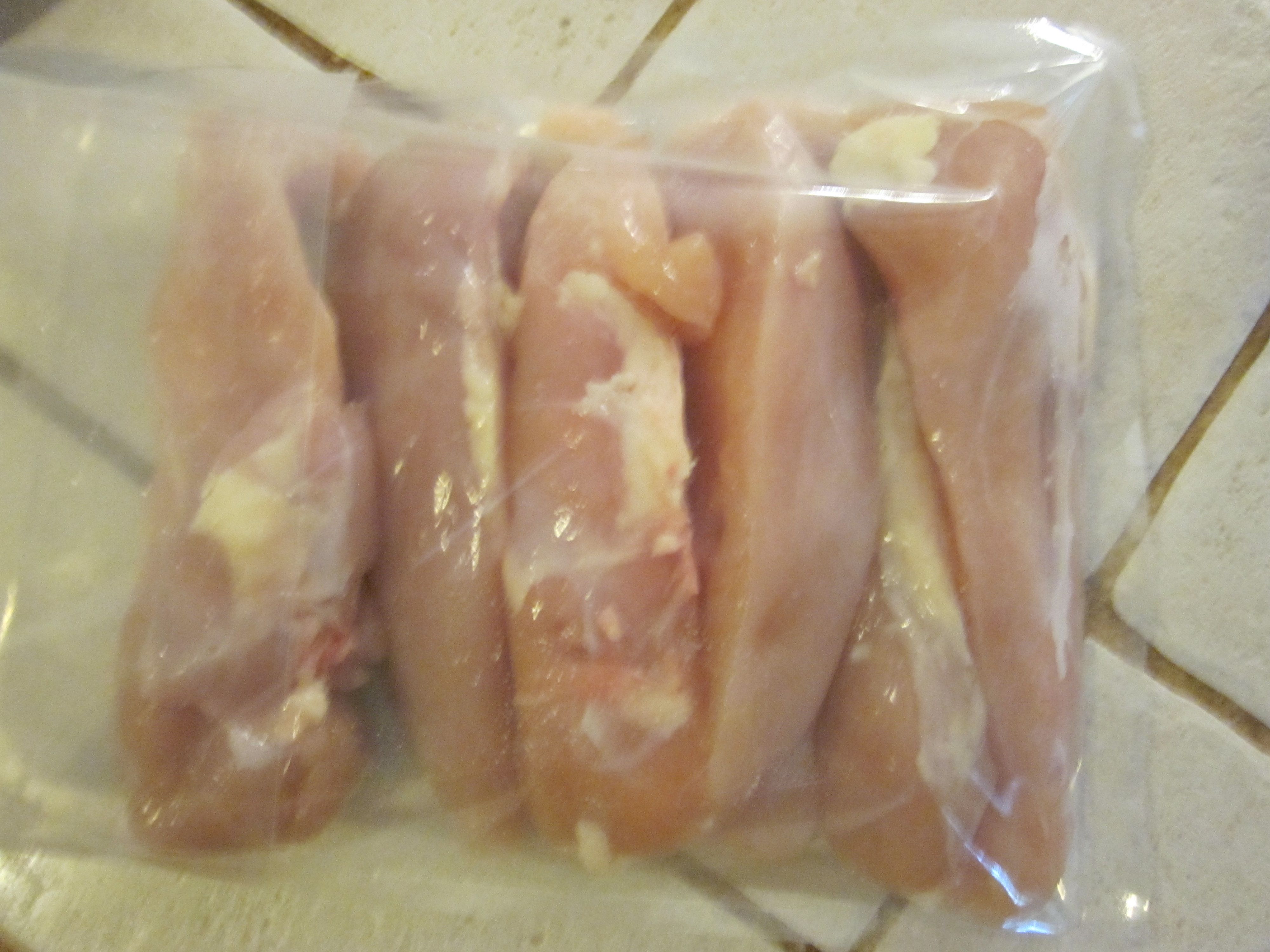
This is just the basic setup. The other part of it is sealing what you are cooking in plastic bags. Seal in a single layer in a vacuum sealer or Ziploc (freezer) bags. For Ziploc bags fill a large container with water and slowly lower the bag into the water. When you get close to the zipper start sealing it, tilting the bag as you go to get out as much air as possible. It is not critical to get all the air out.


 The Cooking Cobb
[…] For more information about sous vide cooking please see How I Sous Vide. […]
Sous Vide Adobo Grilled Chicken Breast « The Cooking Cobb
May 23, 2011
[…] cook fine raw, but I have started cooking them sous vide for an hour at 131°. Before cleaning the salt block let it cool completely. Put a small amount […]
Salt Block Beef Spirals and Shrimp with Dipping Sauces « The Cooking Cobb
May 24, 2011
[…] of the greatest successes I’ve had with sous vide cooking is roast beef for sandwiches. Here is how I do […]
The Best Roast Beef for Sandwiches « The Cooking Cobb
June 5, 2011
[…] fryer, and kept a close eye on it. I have another setup that I used for quite awhile in my my how I cook sous vide post. Remove from bag and pull apart with fork, or you can also do what I like to do which is […]
Smoked / Sous Vide Pulled Pork | The Cooking Cobb
June 16, 2013